
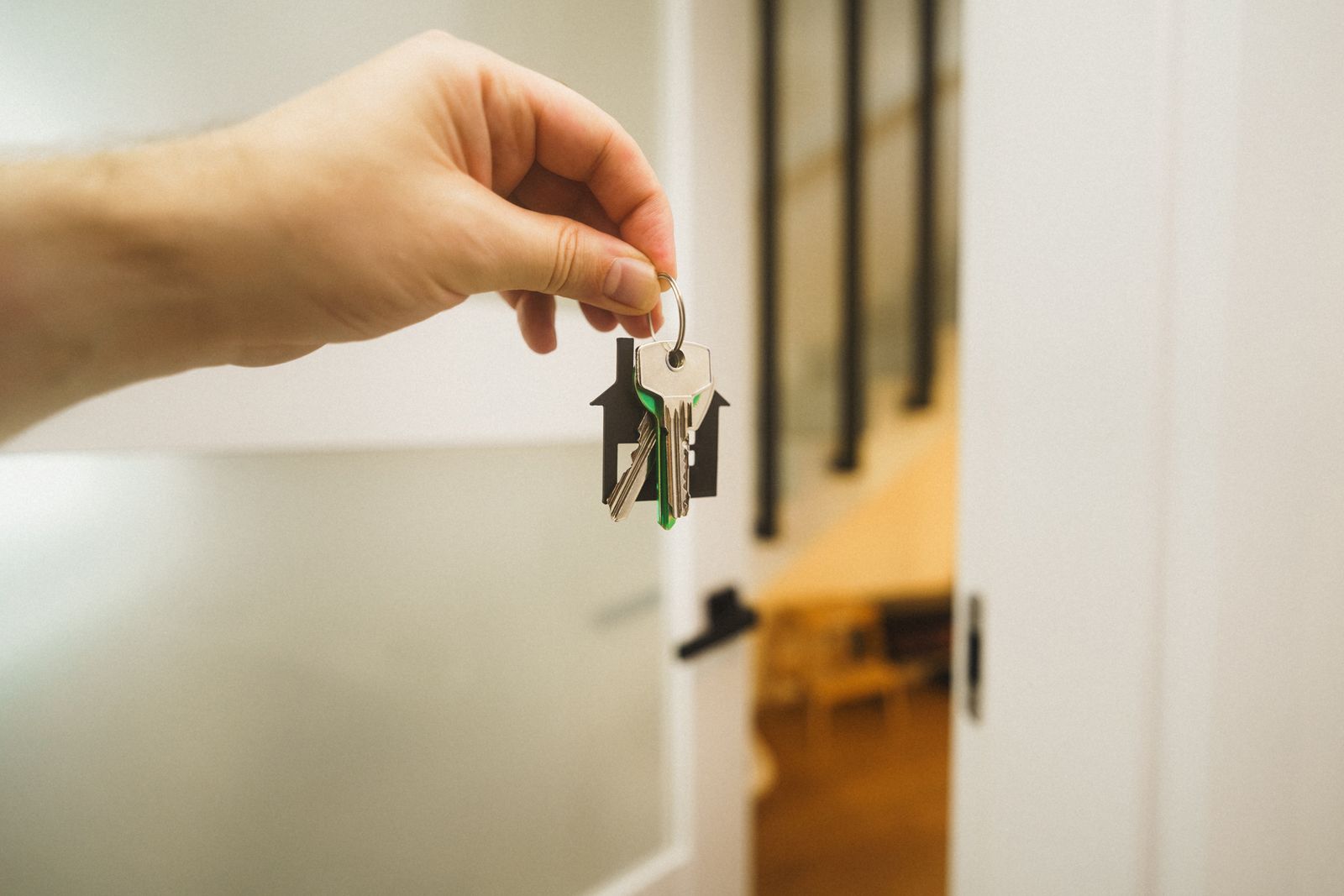
 Photo: Jakub Zerdzicki / Pexels
Moving into your own place is one of the big markers of the launch years. It's also where many people first lose money they didn't need to lose: a deposit that never comes back, a penalty for leaving early, or a "holding fee" paid to someone who didn't own the flat.
Most of this is avoidable. The Rental Housing Act and the Consumer Protection Act (CPA) give tenants clear rights, but they work best if you know them before you sign.
Here's what a first flat really costs upfront, what landlords check, and the rules on your deposit.
The real upfront cost
The rent is only part of it. Before you get the keys, expect to pay:
- A deposit. The law doesn't cap it: the Rental Housing Act says it can't exceed what's agreed in the lease. Agencies say it's often up to two months' rent.
- The first month's rent, usually paid before you move in.
- A credit check fee. TygerBurger reported in 2024 that applicants in Cape Town paid about R185 for the check. Ask what you'll be charged before you apply.
- Moving costs: a bakkie or truck, and possibly a fridge, bed and kettle if the flat is unfurnished.
- Utilities from day one. Electricity, water and Wi-Fi are often not included in the rent.
Worked example (made-up round numbers). Rent is R6,000 a month and the deposit is two months' rent:
| Item | Amount |
|---|---|
| Deposit | R12,000 |
| First month's rent | R6,000 |
| Credit check | R200 |
| Moving (bakkie hire) | R1,500 |
| Prepaid electricity | R500 |
| Total before you sleep there | R20,200 |
That's more than three times the monthly rent. If you're saving towards it, our guide to emergency funds and tax-free savings explains where to keep the money.
What landlords check
Agency Team Seven says landlords and agents typically ask for:
- a certified copy of your ID
- proof of address
- your last three months' payslips (Our first-payslip guide explains what's on yours)
- bank statements (six months if you're self-employed)
- a credit check, which looks at your existing debt and payment history
The same agency says your earnings should be about three times the rent. That's an industry guideline, not a law, but it tells you what to aim for. On R18,000 a month, rent of around R6,000 is what many agents will accept.
Never pay a deposit to "hold" a flat before you've seen it and signed a lease. Fake listings use the same tricks as fake job ads: urgency, a too-good price and a request for money upfront. Our guide to spotting job scams covers the warning signs.
Your deposit: the rules
The Rental Housing Act says the deposit:
- Must be invested in an interest-bearing account with a financial institution, at a rate no lower than a savings account rate.
- Earns interest that belongs to you. You can ask the landlord for written proof of the interest during the lease, and they must provide it.
- Comes back with that interest when the lease ends.
You're also entitled to a dated written receipt for every payment, showing what it was for (rent, deposit or arrears) and the period it covers. Keep every one.
If your landlord is a registered estate agent, the Act says the deposit is handled under the estate agency law instead, which has its own trust account rules.
Why the joint inspections matter
The Act requires two joint inspections, with you and the landlord both present:
- Before you move in, to record existing defects and damage. The list of defects should be attached to your lease.
- At the end of the lease, within three days before it expires, to check for damage caused while you lived there.
Here's the part many people miss: if the landlord fails to inspect with you, the Act treats that as the landlord accepting the flat is in good repair. They then have no further claim against you and must refund your full deposit plus interest.
At the move-in inspection, take dated photos of every wall, floor, tap, window and appliance. Without them, a scratch that was already there becomes your R2,000 problem.
When the deposit must be returned
The Rental Housing Act sets three deadlines:
| Situation | Deadline |
|---|---|
| Nothing is owed to the landlord | Full deposit plus interest, within 7 days of the lease expiring |
| The landlord deducts amounts you owe | Balance within 14 days of the flat being handed back |
| You didn't respond to the request for an inspection, so the landlord inspected alone (within 7 days of expiry) | Balance within 21 days of the lease expiring |
What can and can't be deducted
The landlord may deduct amounts you owe under the lease, including the reasonable cost of repairing damage during your lease and the cost of replacing lost keys. They must make the receipts for those costs available to you.
They're entitled to get the flat back in good repair "save for fair wear and tear", in the Act's words. Faded paint after two years or carpet worn from normal use is wear and tear. A hole in the wall isn't.
Your questions, answered
Can a landlord charge more than the deposit? Yes, if what you owe is more than the deposit. The Act lets a landlord claim compensation for damage you caused and recover unpaid rent. But they must get a Tribunal ruling or a court order to recover unpaid amounts. They can't simply take it.
Can I use my deposit as the last month's rent? The Act doesn't give you that right. The deposit is applied after the lease ends and the flat has been inspected. If you skip the last month's rent, you're in arrears, and the landlord can deduct the rent and still claim for any damage on top.
Do I get interest on my deposit? Yes. It must earn at least a savings rate, and the interest is yours. Ask for written proof of it during the lease.
Leaving a fixed-term lease early
CPA section 14 lets you cancel a fixed-term agreement at any time by giving 20 business days' notice in writing (business days exclude weekends and public holidays). The supplier, here your landlord, may charge a "reasonable cancellation penalty", and you remain liable for what you owe up to the cancellation date.
What's "reasonable"? Business Day reported that the CPA regulations weigh factors including the amount still owing, the lease term, how much notice you gave, industry practice, and whether the landlord could find a new tenant during your notice period. Charging you the rent for the whole remaining lease isn't automatically reasonable, especially if the landlord re-lets the flat quickly.
When a fixed-term lease ends, the CPA says the landlord must remind you 40 to 80 business days before it expires. If neither of you does anything, it continues month to month.
What a landlord can't do
Even if you're behind on rent, a landlord can't lock you out or cut off your electricity or water without a court order, according to GroundUp's guidance on the Act. Eviction also needs a court order. The Sowetan reported that in April to June 2026, Gauteng's Tribunal received 57 complaints about lockouts and 59 about illegally cut-off services, so this does happen.
The Act also says a landlord may inspect during your lease only in a reasonable manner after reasonable notice, because you have a right to privacy.
Where to complain
- Write to the landlord first, quoting the deadline they've missed and asking for the deposit or receipts by a set date.
- Lodge a complaint with your province's Rental Housing Tribunal. The service is free and its rulings are binding. You'll need your ID, the lease, proof of payment, and both parties' addresses and contact details. In Gauteng, most cases are settled at mediation within three to six months, the Sowetan reported.
- Or use the Small Claims Court for a money claim. From 1 August 2026 its limit is R30,000, and you don't need a lawyer.
Pre-move-in checklist
- I've seen the flat in person, and checked who the owner or agent is
- I have a signed written lease before paying a deposit
- I know the deposit amount and which account it's held in
- I've done a joint inspection and the defects list is attached to the lease
- I have dated photos of every room
- I have a receipt for the deposit and first month's rent
- I know what's included in the rent (water, electricity, parking, Wi-Fi)
- I've noted the lease end date and the notice I need to give
Rule of thumb: no lease, no money. No inspection, no move.
The short version
Budget for about three times the rent before you move in. Pay nothing until you've signed a lease. Do the joint inspection and take photos. Your deposit must earn interest and come back within 7, 14 or 21 days, depending on what's owed. If it doesn't, the Rental Housing Tribunal is free.
How we wrote this: CareerTrek is not a news outlet and we don't report original news. We read the official and expert sources below, then explain what they say in plain language. Rules and figures change, so check the official source before you make a decision.
Sources & further reading
- Government Gazette 20726 — Rental Housing Act 50 of 1999 (15 December 1999)
- Acts Online — Consumer Protection Act 68 of 2008, section 14: Expiry and renewal of fixed-term agreements
- Business Day — Early lease exit penalties: how much is really fair? (21 September 2020)
- Sowetan — Housing rental wars pile up in Gauteng (7 September 2026)
- GroundUp — Answer to a reader's question on lockouts, electricity and the Rental Housing Tribunal (15 December 2020)
- SAnews — Small Claims Court limit raised to R30 000 (23 July 2026)
- Team Seven — What you need to qualify for a rental property (25 July 2025)