
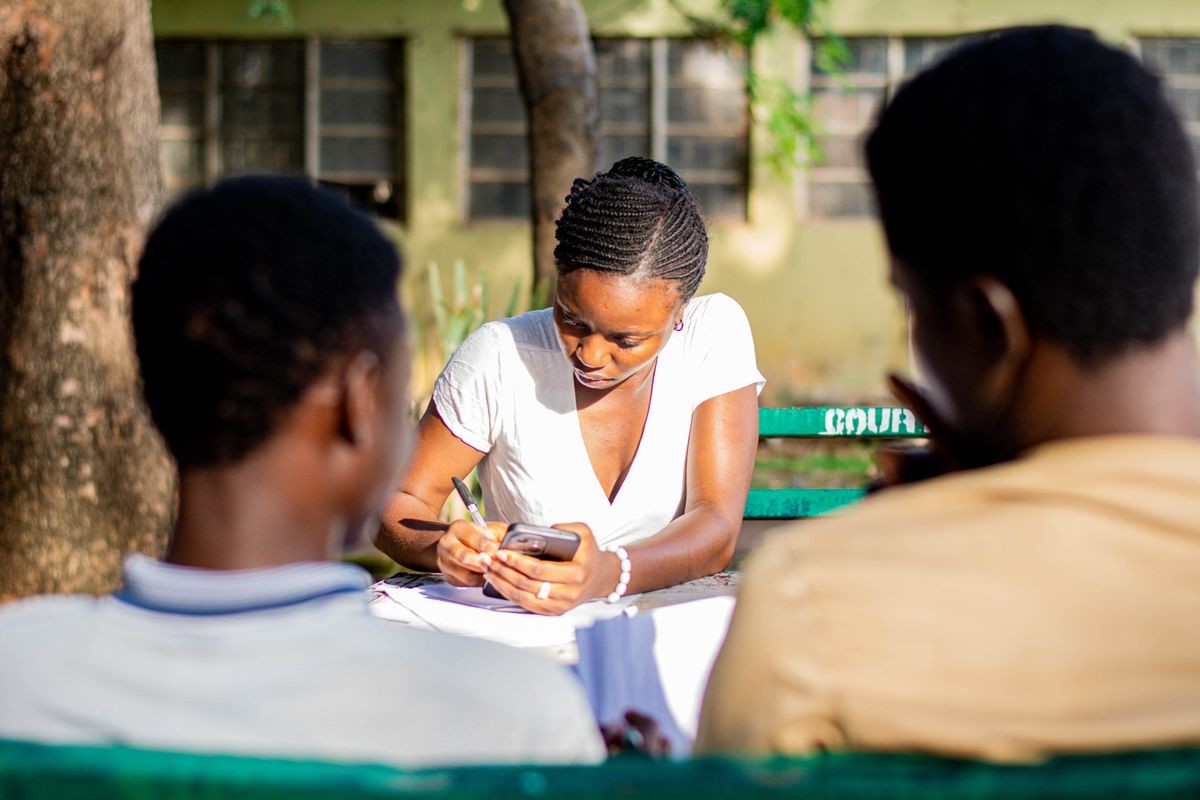
 Photo: Zingks photography / Pexels
The National Student Financial Aid Scheme (NSFAS) opened applications for the 2027 academic year on 18 September 2026.
Treat 31 October 2026 as your deadline. NSFAS's own application page says applications close on 31 October 2026 at 23:59, and that late applications can't be accepted. At the launch, Minister Buti Manamela gave a later closing date of 18 November 2026, which is the date SAnews reported. Until NSFAS changes the date on its own website, don't count on the extra weeks.
Funding outcomes are expected in December, before registration.
If you're starting university or TVET college next year, or continuing and looking for funding, here's the plan, organised by what your household earns.
First: admission and funding are separate applications
This catches people out every year. As Minister Buti Manamela stressed when the 2027 cycle opened, you must apply to your university or college for a place, and separately apply to NSFAS for funding. Being accepted doesn't mean you're funded, and being approved for funding doesn't give you a place.
Do both, and don't wait for one before starting the other.
Which bracket are you in?
"Household income" means the combined annual income of your household. NSFAS and ISFAP both use these bands:
| Combined household income | Main options |
|---|---|
| Up to R350,000 a year | NSFAS bursary |
| R350,001 to R600,000 a year ("missing middle") | NSFAS student loan, ISFAP bursary (for selected fields) |
| Any income | Company and field-specific bursaries. Check each one's criteria |
Students with disabilities: the NSFAS bursary threshold is higher, at R600,000 a year.
The NSFAS bursary: up to R350,000
The NSFAS bursary is for South African citizens and permanent residents at public universities and TVET colleges, from households earning no more than R350,000 a year.
Under the 2026 guidelines, the bursary covers tuition (including registration) plus allowances. For university students these include learning materials, a living allowance, and accommodation or transport, not both. It's a bursary, not a loan, but you must keep meeting NSFAS's academic rules to keep your funding.
The NSFAS loan: R350,001 to R600,000
If your household earns between R350,001 and R600,000, NSFAS offers a student loan for the missing middle.
Read that word again: loan. The minister described it as "repayable in accordance with the applicable terms and conditions". It isn't a bursary. You'll sign a loan agreement and will have to repay it.
Before you accept, check exactly what the loan covers. Don't assume it comes with the living, accommodation and transport allowances that bursary students get, and plan how you'd cover day-to-day costs if it doesn't.
The government says it has started work on a loan management system to support these loans. Read the terms carefully before you accept.
ISFAP: a bursary for the missing middle, in selected fields
The Ikusasa Student Financial Aid Programme (ISFAP) was set up for "poor" and "missing middle" students, with a focus on households earning up to R600,000. Unlike the NSFAS loan, ISFAP funding is a grant bursary. According to ISFAP, it covers the full cost of study (tuition, accommodation, food, learning materials and a living allowance), plus academic and personal support.
Things to know:
- It funds occupations in high demand. UniApplyForMe lists fields such as accounting, actuarial science, computer science, engineering, IT, medicine and nursing.
- It's available only at partner public universities for approved programmes, so check that your university and qualification are included.
- Selection involves a household means test, your academic results and, at some universities, a National Benchmark Test.
- Closing date for 2027 funding: UniApplyForMe lists 31 October 2026. Check ISFAP's own site to confirm applications are still open.
- ISFAP's FAQ says applications are made online at applyonline.isfap.co.za.
Company and field bursaries
Many companies, government departments and professional bodies offer bursaries in their own fields, such as teaching, engineering, commerce and health. Each sets its own criteria, and some may choose students on results and field of study rather than household income. Some also require you to work for the funder after you qualify. Read that part of the agreement carefully. (See our guide to studying while you work.)
Your deadline calendar
| Date | What's due |
|---|---|
| 31 October 2026 | NSFAS 2027 applications close at 23:59, according to NSFAS's website |
| 31 October 2026 | ISFAP applications for 2027 close (as listed by UniApplyForMe; confirm with ISFAP) |
| 18 November 2026 | The NSFAS closing date the Minister gave at the launch. Don't rely on it unless NSFAS confirms it on its website |
| December 2026 | NSFAS expects to release funding outcomes |
Company bursary deadlines vary. Check each funder's website.
Scam warning
Scammers target students during application season.
- Apply only through official portals: myNSFAS at my.nsfas.org.za (linked from nsfas.org.za), and ISFAP's own application site.
- Never pay an "agent" to apply for you or to speed things up. Applying is free.
- NSFAS says it will never ask for your password or one-time PIN (OTP).
- If someone asks you for money or your login details, report it through the fraud-reporting page on nsfas.org.za.
Your checklist for this week
- Apply to your chosen universities or colleges, if you haven't already.
- Create or log in to your myNSFAS account and start your application.
- Gather your documents, including your ID and the consent and declaration forms NSFAS asks for, and check the portal for any other supporting documents it needs.
- If your household earns more than R350,000, check whether your field and university are covered by ISFAP before 31 October.
- List two or three company bursaries in your field and note their deadlines.
Dates and criteria were checked on 2 October 2026. NSFAS and ISFAP can update their rules, so always confirm on their official websites before applying.
How we wrote this: CareerTrek is not a news outlet and we don't report original news. We read the official and expert sources below, then explain what they say in plain language. Rules and figures change, so check the official source before you make a decision.